By David Gravely
At the Lady Cougar Basketball game against Blacksburg January 23, an announcement was made to recognize a group that many didn’t even realize existed. Thanks to some digging by former Cougar and RU basketball standout Ron Shelburne and the Pulaski Historical Society, along with archived articles and yearbooks found online, the story of the 1926 Pulaski High School Orioles women's basketball team can now be remembered.
It was 100 years ago. The team, led by coaches known only as Miss Moore and Miss Hurley in the 1926 Pulaski High School Oriole yearbook, completed an outstanding season, ending with a 20-9 win over Woodrow Wilson High School of Waynesboro to earn the Virginia Interscholastic Athletic League (VIAL) State Championship. This group eventually became the current Virginia High School League (VHSL).
The Orioles, at that time, competed as a part of Group II. There were two groups. Group I was made up of larger schools with higher populations. Group II was mainly smaller or rural schools.
This was widely regarded as the “Golden Era” of women’s basketball, but it was not yet standardized into the system we see today. Schools from Group I and II from across the state played in a singular, open-invitational State Championship tournament held in Richmond. The 1926 tournament was a single-elimination round-robin event that brought the best teams from across the Commonwealth, regardless of size, to Richmond.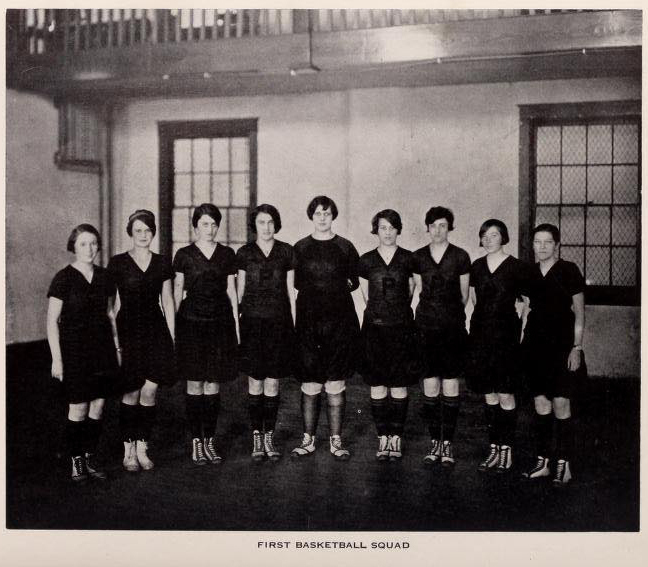
A historic side note: Because the VHSL began to phase out sanctioned girls' state tournaments shortly after 1926 (due to contemporary debates about the "intensity" of female athletics), Pulaski’s victory is historically significant. They are often cited in records as the 1926 State Champions, a title they held effectively for decades until the modern era of girls' basketball was reinstated in the 1970s following Title IX.
While we think of basketball as a fast-paced, full-court game today, in 1926, the Pulaski girls played a version often called "Basquette" or "Girls' Rules." Unlike the modern game, the 1920s version often utilized a "three-court" or "two-court" system where players were restricted to certain sections of the floor to prevent "overexertion," though some high school leagues were already transitioning to a more modern full-court style.
Players were typically limited to only one or two dribbles before they had to pass or shoot. This made the Pulaski team's success depend heavily on precision passing and the "set shot" accuracy of players. After every single basket, play stopped and returned to the center circle for a jump ball, making the height and jumping ability of the center a massive strategic advantage.
Articles found online show the excitement this team brought to the county and school. Following their state victory, they were described by The Southwest Times as "The Pride of the New River Valley." The paper often noted their "scientific" approach to the game—referring to their disciplined passing and ability to exploit the three-court rules.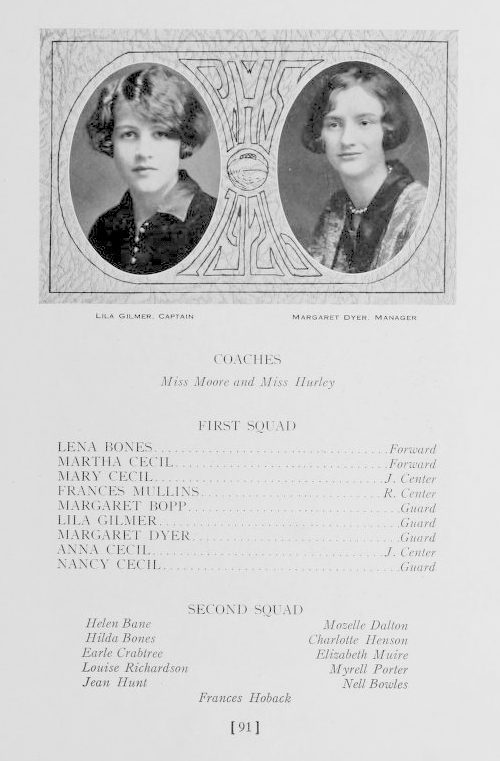
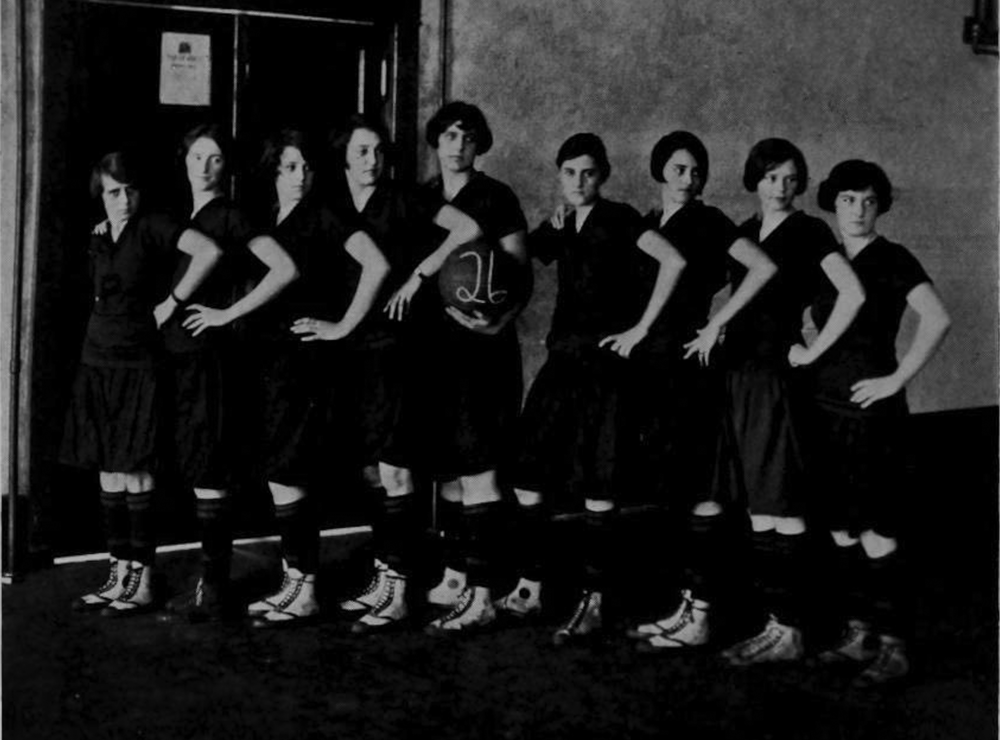
After winning the state title, members of the team were often selected for "All-State" honors by Richmond-area newspapers. While specific trophies from that era are often lost to time or school fires, their 1926 team photo—featuring the girls in their iconic heavy wool tunics and knee-high socks—is a staple in the Pulaski County Historical Society archives.
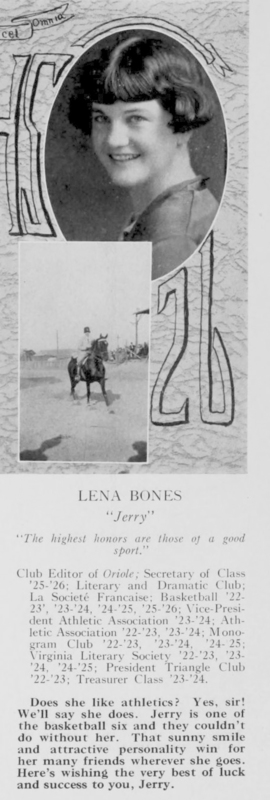
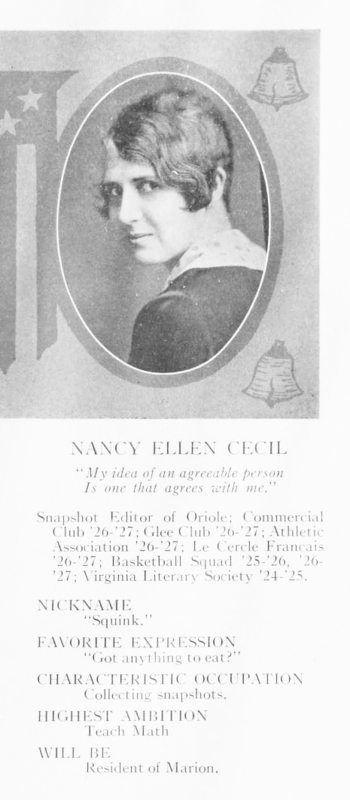
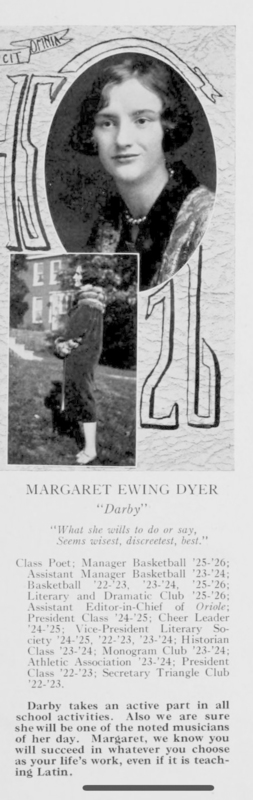
The roster lists nine players on the first squad. Those include Lena Bones (forward), Martha Cecil (forward), Mary Cecil (J. Center), Frances Mullins (R. Center), Margaret Bopp (guard), Lila Gilmer (guard and captain), Margaret Dyer (guard and manager), Anna Cecil (J. center), and Nancy Cecil (guard).
A “second squad” roster, which was likely comparable to our current junior varsity squads, lists Helen Bane, Hilda Bones, Earle Crabtree, Louise Richardson, Jean Hunt, Mozelle Dalton, Charlotte Henson, Elizabeth Muire, Myrell Porter, and Nell Bowles.
The Orioles typically played most of their games on Friday nights. Travel was difficult, and most schools usually played “home-and-home” series with schools nearby. During the regular season, there were wins recorded over Wytheville, Radford, and Salem (most likely Andrew Lewis). Keep in mind that this was 1926. Driving to Christiansburg, Wytheville, or Roanoke was a much bigger deal then.
The Orioles overcame a lone loss against Salem, 7-13, by defeating them in the regular season rematch. They went on to again defeat Salem, this time 24-8, to win the District Championship. A 40-13 win over Bristol earned the Orioles the Southwest Virginia Championship and propelled them to the State Tournament.
That game was held Monday, March 15, 1926, in Richmond. The end result was a 20-9 victory over Wooddrove Wilson High School of Waynesboro for the first State Championship ever in school history.
After that win, the Orioles were highlighted as one of the top teams in the South. They were invited to Ohio for the Women’s National Championship Tournament, held in Cincinnati. According to archived articles in The Southwest Times, the team lost in the tournament, but the details were not readable due to print quality issues.
That year, the tournament was highly prestigious but also under fire. The 1925 National Champion was Hempstead High (NY), but by 1926, school boards across the country were beginning to forbid their girls' teams from traveling out of state due to new "health and modesty" guidelines.
Shortly after the 1926 season ended, the Virginia Literary and Athletic League (which became the VHSL) began to phase out girls' state tournaments. Critics at the time argued that high-stakes competition was "unladylike" or physically taxing.
Because of this, the 1926 Pulaski team remained one of the final official state champions for nearly 50 years, until the modern tournament era began in the 1970s.
One year later, with several key Pulaski players lost to graduation, the Orioles returned to the State Championship game to again face off with a much-improved Woodrow Wilson squad. This time, Wilson shined and earned the 32-23 win, leaving Pulaski as the State Runners-Up. Over a four year span, Woodrow Wilson put together a record of 73-8 overall.
1926 was also the year the Amateur Athletic Union (AAU) held its first-ever National Women's Basketball Championship (in Los Angeles). While the Struthers tournament was for high schools, the AAU event signaled that women's basketball had reached a fever pitch of popularity. The fact that Pulaski was mentioned in the same breath as national competition shows they were playing at a level far beyond typical high school athletics.
In 1926, the Women’s Division of the National Amateur Athletic Federation (WDNAAF) began a massive campaign to outlaw national tournaments for girls, claiming the stress of travel and competition was "harmful." Pulaski’s invitation to the National Tournament came at the exact moment this ban was being enforced by school principals across the East Coast.
In 1926, senior portraits in the yearbook were accompanied by short, poetic, or humorous descriptions known as "sketches." These give us a glimpse into the personalities of the champions.
One of those photos described Lena "Jerry" Bones (The Leader). Her senior sketch highlights her as a versatile athlete and a magnetic personality. It notes her "sunny smile" and describes her as being "as full of pep as a red-hot pepper." She was voted "Most Athletic" among the girls, a title she clearly earned on the court.
The yearbook writers took great pride in describing the final title game. The tone is one of intense local pride. When discussing the victory, the write-up describes the Woodrow Wilson team as, "formidable opponents from the East," but claims that Pulaski’s "superior teamwork and dazzling passes" left the visitors "bewildered."
When discussing the environment at games, it mentions that the "Old Gymnasium" (the Oriole Box) was packed to the rafters, stating that, "every heart in Pulaski beat in unison with the bouncing ball." It was also, at times, referred to as a “cauldron.”
The yearbook staff also gave the team a nickname. The yearbook refers to the girls as the "Invincibles of the Southwest," celebrating the fact that they brought the very first VHSL state trophy of its kind to the school.
The team received significant coverage in The Southwest Times. Following their state victory, they were described as "The Pride of the New River Valley." The paper often noted their "scientific" approach to the game—referring to their disciplined passing and ability to exploit the three-court rules.
In the 1920s, many high-achieving female athletes from Southwest Virginia continued their education at "Normal Schools" (the period term for teachers' colleges). Records indicate that at least a few players from this team were part of a generation of women who pursued higher education at institutions such as Radford State Teachers College (now Radford University) or Harrisonburg State Teachers College (now James Madison University).
At the time, these colleges had robust intramural and intercollegiate "Basquette" programs. For many of the 1926 champions, their high school success provided the foundation for playing at the collegiate level, where the rules remained similar to the high school "girls' rules."
Other newspaper stories suggest just how invested in this team the community was. To get to the State Championship tournament, the team traveled by train via the Norfolk and Western Railway. When the team returned to the Pulaski train station after their win, they were met by a brass band and a large portion of the town's population. It was reported that the players were carried on the shoulders of supporters from the station to the courthouse, where celebratory speeches were given and the team was recognized.
Another fun fact for the season was the infamous “Bloomers vs Trousers” game. The team played Radford High School, earning a decisive 48-4 win. That same night, the team then took part in a playful exhibition against the faculty, splitting into two mixed squads humorously called the “Bloomers” and “Trousers.” The “Trousers” emerged victorious — and the good-natured rivalry became part of school lore. Now, we have an annual Faculty vs Seniors game as a fundraiser.
The 1926 Pulaski girls’ team not only dominated on the court — they made history. Their championship stands as a testament to early female athletic excellence in Virginia and remains a proud moment in Pulaski’s legacy. Their story is one of a determined group of young women who blazed a trail for generations to come.
It is important to note that the 1926 title belongs to the original Pulaski High School Orioles. When the school merged with Dublin High in 1974 to form Pulaski County High, they kept the history of both schools.
If you are in the Pulaski area, the Raymond F. Ratcliffe Memorial Transportation Museum and the Pulaski County Courthouse archives often hold physical photographs of this team. The 1925–1926 Pulaski High School girls' team remains one of the most decorated in the town's history. Here is the reconstructed roster and the known trajectory of their championship season.
Moving forward to modern day, there have been more recent success stories for women’s basketball in Pulaski County. 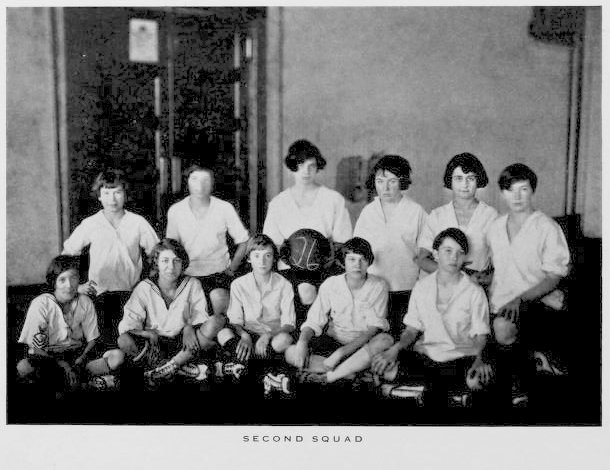
Since the 1990-91 season, the Lady Cougar Basketball team at Pulaski County High School has earned seven District Championships, and six Region Championships. The team finished as the State Runners-Up five times, including three trips to Richmond in five seasons between the 2018-19 season and the 2022-23 season.
The current Lady Cougar squad is 13-3 and holding on to the second spot in the River Ridge District. While the JV squad is going through some growing pains this season, that same squad compiled a record of 125-3 over the course of six seasons from the 2018-19 season to the 2023-24 season. Those wins would have likely been higher were it not to the COVID-19 season that only saw the JV team play six games.
The recognition of the 1926 team serves as a perfect reminder that while the rules have changed—from the "two-court" system of 1926 to today’s fast-paced full-court game—the community's passion for Lady Cougar basketball remains exactly the same as it was 100 years ago.
Come out and support the Lady Cougars and all of the Pulaski County sports and activities when you can.